HPE
= Hydrogen Peroxide Emulsion
ANE
= Ammonium Nitrate Emulsion
Development of hydrogen peroxide emulsion (HPE) continues at a rapid pace. In early 2027, FORCIT will introduce Kemiitti HPE, a new hydrogen peroxide emulsion explosive for underground charging.
We previously published an article on hydrogen peroxide field trials in Ruutiset 1/2025. We also published Timo Halme’s presentation from the 2025 EFEE (European Federation of Explosives Engineers) conference, Health, safety and environmental aspects of using HPE explosives, on the FORCIT Expert Articles page of our website.
In this issue, we continue to explore occupational safety and environmental issues. We review the main points of Jussi Saavalainen’s presentation at INFRAn ammattipäivät 2026, Occupational safety and environmental aspects of hydrogen peroxide emulsions, alongside new research findings.
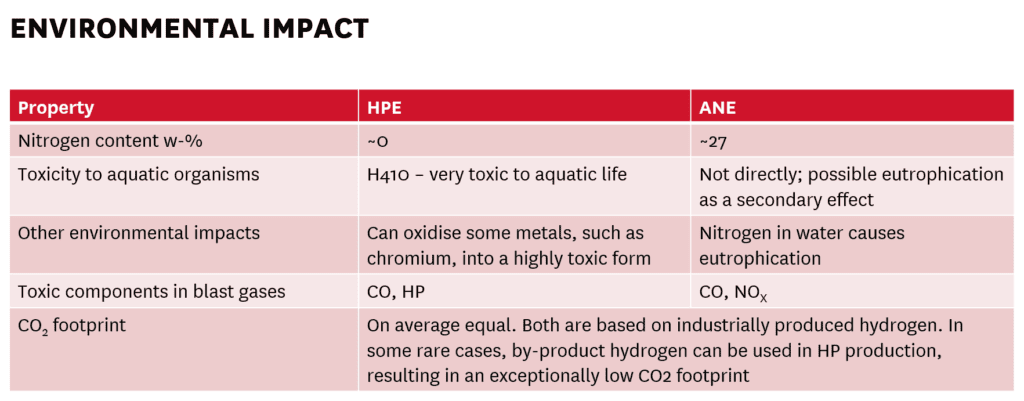
Jussi Saavalainen began his presentation at INFRAn ammattipäivät 2026 by reminding the audience why the development of hydrogen peroxide emulsions (HPE) was initiated. The main reason is that they are nitrogen-free, which solves the problem of water-soluble nitrogen emissions associated with the ammonium nitrate emulsions used to date. In addition, when hydrogen peroxide emulsions are used, no nitrogen oxides are present in the blasting fumes.
However, HPE explosives also bring challenges related to occupational safety and the environment.
Are HPE explosives safe to use?
In terms of explosive safety, the safe-handling characteristics of HPE meet European requirements, and FORCIT has obtained CE approval for the Kemiitti HPE hydrogen peroxide explosive. The explosive properties of Kemiitti HPE correspond to those of Kemiitti 810.
The occupational safety and environmental challenges are related to the properties of the raw materials used in the manufacture of explosives. Typically, a 50–60% aqueous solution of hydrogen peroxide is used to manufacture HPE.
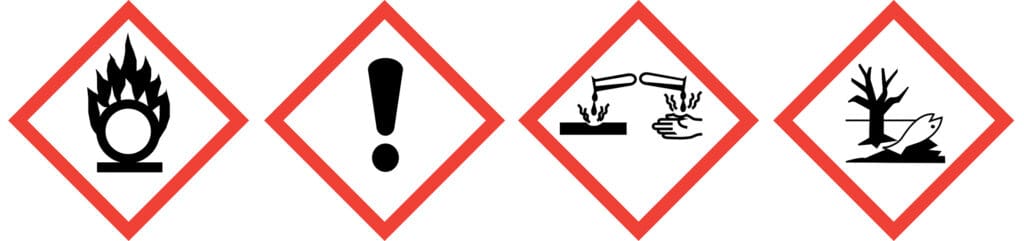
The main hazards of the solution affecting both handling safety and occupational safety are:
- H272 May intensify fire; oxidiser
- H302 + H332 Harmful if swallowed or if inhaled
- H314 Causes severe skin burns and eye damage
- H335 May cause respiratory irritation
- H410 Very toxic to aquatic life with long lasting effects
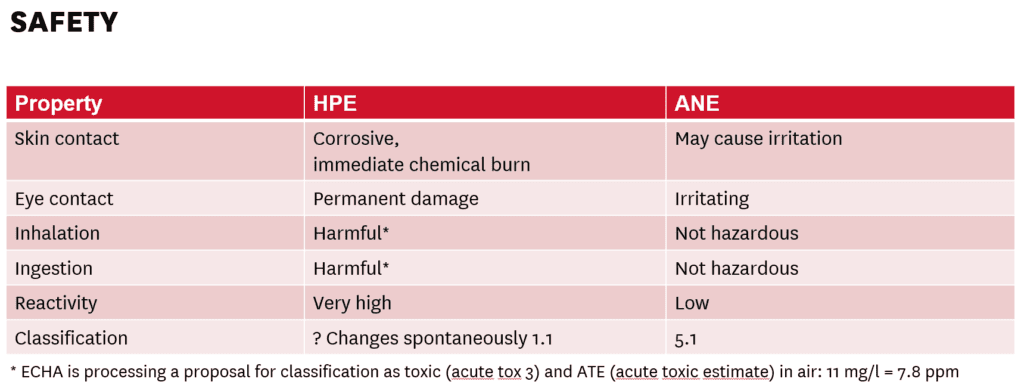
Due to its toxicity, ECHA (the European Chemicals Agency) is currently considering a proposal to classify hydrogen peroxide as toxic. The outcome of this process will be known in approximately two years.
New recommendation for protective equipment
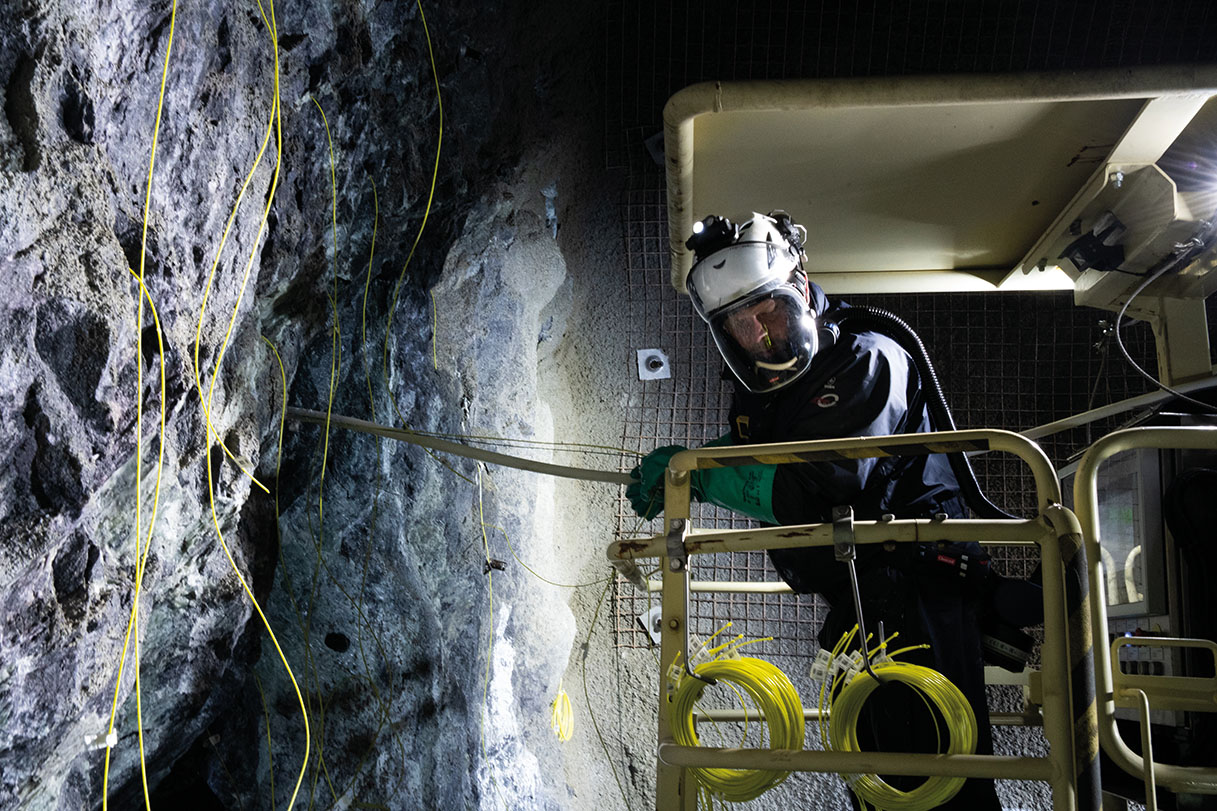
Based on the properties of the raw materials mentioned above, occupational safety considerations and measurements obtained from field trials, FORCIT recommends a new, higher level of protective equipment for handling HPE explosives. The recommended protective equipment is intended to improve personnel protection in demanding working conditions and reduce exposure to potential risks. The recommended protective equipment is:
- Chemical protective coveralls
- Powered full-face respirator with a suitable gas filter
- Long-cuff chemical protective gloves
- Rubber boots, with trouser legs worn over the boots
Reactivity of hydrogen peroxide
In addition to the factors affecting occupational and handling safety, the high reactivity of concentrated hydrogen peroxide solution is seen as a risk when it reacts with minerals in the rock. A large number of minerals, particularly sulphur-containing minerals, cause catalytic decomposition of hydrogen peroxide. As a result, the temperature rises very rapidly to close to 100 °C, and the oxygen and water vapour released as decomposition products can cause boiling-hot explosive to be forcefully ejected from the borehole.
In terms of environmental impacts, the high reactivity of hydrogen peroxide poses challenges, as its reactions with minerals can lead to the formation of highly toxic compounds. One example is the oxidation of chromium to toxic chromates.
These properties and the resulting risks require further research. A comparison of ANE and HPE explosives in terms of environmental impacts and occupational safety is also provided alongside.
Development work on HPE explosives continues to address the previously identified environmental and occupational safety challenges. At the same time, we are continuing field trials. We will provide further updates on the progress of HPE development as the research advances.
For more information about Kemiitti HPE, please contact Center of Excellence Manager Jussi Saavalainen, jussi.saavalainen@forcit.fi
Text: Timo Halme ja Jussi Saavalainen
Image: Mari Halonen